Home
How the Scorcher Skill Works in Monster Hunter Wilds After the Title Update 4 Buff
As of late 2026, the Scorcher skill has transitioned from a niche utility to a top-tier DPS contender in Monster Hunter Wilds. Following the Title Update 4 (TU4) buffs, the skill now deals a combination of Fixed Damage (ignoring monster defenses) and Fire Damage . It features a ~33% proc rate with a 2.5-second internal cooldown, making it exceptionally strong for fast-hitting weapons like Sword & Shield and Dual Blades. When paired with Zoh Shia weapons, it triggers the "Whiteflame" synergy for massive explosive damage.
What Is the Scorcher Skill and Why Is Everyone Using It Now?
In the current Monster Hunter Wilds meta, few skills have seen as dramatic a rise in popularity as Scorcher. Originally introduced as a secondary offensive perk, Scorcher provides a chance to deal additional fire-based explosions upon landing a hit. Crucially, this effect triggers regardless of your weapon's base element, allowing even Raw or Status-focused hunters to tap into its power.
Before Title Update 4, Scorcher was often dismissed by the community as a "trap" skill. The damage was purely elemental, meaning it was heavily mitigated by monsters with high fire resistance. Furthermore, the proc rates were inconsistent, leading many to favor standard Attack Boost or Critical Eye. However, the landscape changed entirely with the TU4 patch notes, which introduced a Fixed Damage component to every proc. This means a portion of the damage now ignores Hitzone Values (HZVs), dealing consistent numbers even against the hardest monster parts.
According to Game8's analysis of the TU4 changes , this shift has made Scorcher a premier choice for supplementary DPS. It is no longer just a "Fire weapon skill"; it is a tool for breaking tough parts and maintaining high damage output during hunts where the monster's elemental weaknesses are difficult to reach. The community buzz is now centered on how to maximize these procs, especially for aggressive playstyles that can trigger the skill as soon as its internal cooldown resets.
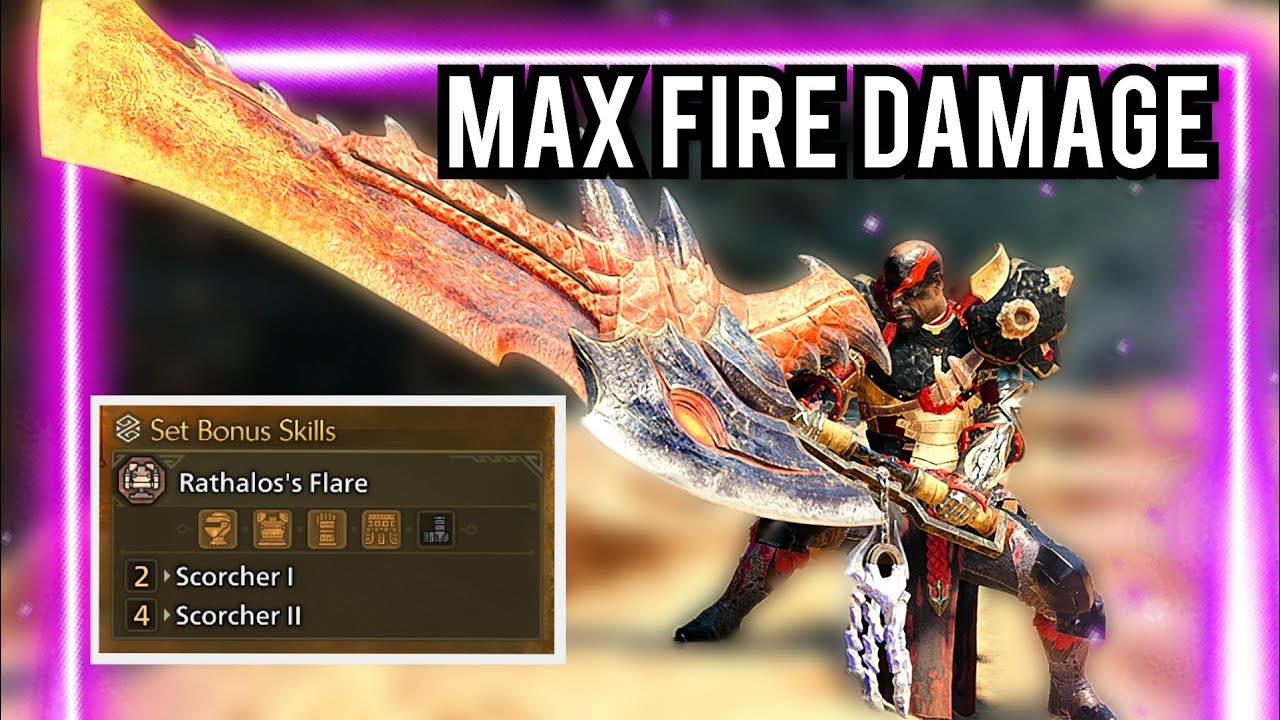
Image source: YouTube
How the Damage Math Breaks Down Between Fixed and Fire Damage
Understanding the math behind Scorcher is vital for optimizing your build. Every time the skill triggers, it essentially hits the monster twice in a single frame: once with Fixed (True) damage and once with Fire damage. This dual-nature makes it effective across a wider variety of matchups than traditional elemental skills.
Understanding Fixed Damage
Fixed damage is the "secret sauce" that makes Scorcher II so valuable in the endgame. Unlike standard attacks, Fixed damage does not care if you are hitting a monster's soft head or its armored tail. If the skill says it deals 40 Fixed damage, it will deal exactly 40 damage (scaled by quest modifiers) every single time. This makes it a top-rated option for monsters like Basarios or Gravios, where hitting weak points is a constant struggle.
Understanding Fire Damage
The second half of the proc is elemental Fire damage. This portion is affected by the monster's Fire HZV. If you hit a monster that is extremely weak to fire (like Goss Harag), this number will swell. Conversely, against a fire-resistant monster like Teostra, this portion will be significantly reduced. However, because the Fixed portion remains constant, the skill never becomes truly useless.
| Skill Level | Fixed Damage | Base Fire Damage | Total (vs 0 HZV) |
|---|---|---|---|
| Scorcher I | 20 | 60 | 20 |
| Scorcher II | 40 | 120 | 40 |
| Whiteflame Scorcher I | 60 | 70 | 60 |
| Whiteflame Scorcher II | 80 | 140 | 80 |
Data sourced from Reddit Meta Analysis deep-dives .
Understanding the Internal Cooldown and Proc Rates
You might wonder why a fast weapon like the Dual Blades doesn't trigger Scorcher on every single hit of a 10-hit combo. This is due to the Internal Cooldown (ICD) . To prevent the skill from becoming completely broken on high-frequency weapons, Capcom implemented a 2.5-second window. Once Scorcher procs, it cannot proc again for at least 2.5 seconds, regardless of how many times you hit the monster in between.
The 33% Proc Rule
Even when the cooldown is ready, the skill isn't guaranteed to trigger. Testing by the community suggests a base proc chance of approximately 33% (1 in 3 hits). For a Sword & Shield user, this usually means the skill triggers almost immediately after the 2.5-second window expires, as they land multiple hits per second. For slower weapons, the inconsistency can be more noticeable.
The Hidden "Pity Mechanic"
One of the most interesting discoveries by high-level testers is the existence of a "pity mechanic." If the skill fails to proc for a certain duration after the ICD has reset, the probability of the next hit triggering Scorcher appears to increase. This ensures that even if you have a string of bad luck, your DPS remains relatively stable over the course of a 5-to-10-minute hunt. Most aggressive players can expect between 60 and 80 procs in a standard endgame hunt, contributing thousands of extra damage points.
Why the Whiteflame Synergy Is the New Meta for Fire Weapons
If you are looking for the absolute peak of fire damage, you must look at the synergy between Scorcher and Whiteflame Torrent . This unique effect is found on Zoh Shia weapons and represents a significant advancement in elemental build-crafting. Rather than having two separate explosions, the game merges Scorcher and Whiteflame into a single, massive "Whiteflame Scorcher" proc.
As shown in the damage table above, a Whiteflame Scorcher II proc deals a staggering 80 Fixed damage and 140 Fire damage. This is double the Fixed damage of standard Scorcher II. Visually, you can tell the synergy is active by the white-orange flame effect that erupts from the monster. This interaction has made Zoh Shia weapons a leading choice for speedrunners tackling fire-weak targets.
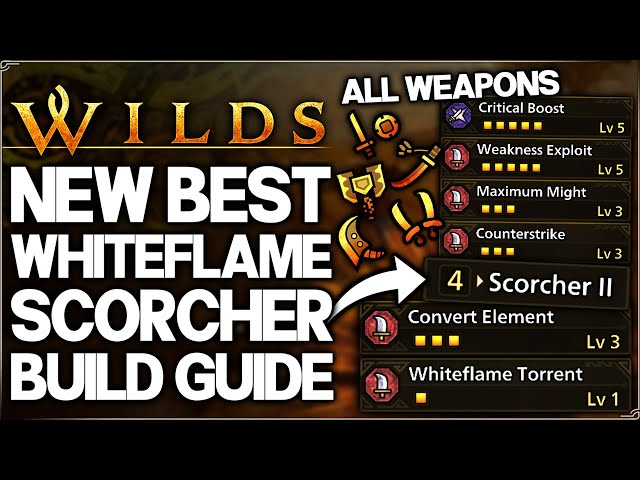
Image source: YouTube
Scorcher vs Flayer — Which Skill Deals More Damage?
A common question in the MH Wilds community is how Scorcher compares to Flayer , the signature skill of Arkveld equipment. While both provide extra damage procs, they function on fundamentally different logic. Choosing between them depends entirely on your weapon choice and how long you expect the hunt to last.
- Scorcher
- Cooldown-based. Triggers frequently (every 2.5s+). Deals smaller, consistent chunks of Fixed and Fire damage. Ranks among the top for fast weapons.
- Flayer
- Buildup-based. Functions like a status effect (Poison/Blast). Deals a large burst of damage (~250 flat) once the threshold is met. Better for slower, heavy-hitting weapons.
In hunts lasting longer than three minutes, Scorcher almost always wins in total damage accumulated. Because Flayer requires buildup, its frequency drops as the monster's resistance increases throughout the fight. Scorcher, being tied to a static timer, maintains its efficiency from the first minute to the last. For weapons like the Great Sword, however, Flayer is often a stronger contender because the GS doesn't hit often enough to take advantage of Scorcher's short 2.5s cooldown.
Best Weapons and Armor Sets to Maximize Scorcher Damage
To get the most out of Scorcher, you need to pair it with weapons that can "fish" for procs the moment the internal cooldown ends. Not all weapons are created equal in this regard.
S-Tier: Sword & Shield
The SnS is widely regarded as one of the best vehicles for Scorcher. Its fast animations and low commitment allow you to stay glued to the monster, ensuring you hit that 33% proc chance the millisecond the ICD resets.
A-Tier: Dual Blades
Dual Blades easily bypass the cooldown window. While they hit faster than the 2.5s timer, their sheer aggression ensures Scorcher procs with perfect regularity. A top-tier choice for elemental builds.
B-Tier: Switch Axe
The multi-hits in Sword Mode and the Zero Sum Discharge (ZSD) ticks make the Switch Axe a strong contender. ZSD, in particular, almost guarantees a proc during the final explosion.
Armor Sources and Set Bonuses
Currently, the primary way to reach Scorcher II is through the Rathalos Set Bonus . While Scorcher I can be found on individual pieces (like the Rathalos Mail), the jump to level II requires the full set or specific endgame augmentations. In the very late game, Gogmazios pieces and Transcended Gear augmentations allow hunters to slot Scorcher II into mixed sets, providing much-needed flexibility for Critical Eye and Weakness Exploit.
How to Scale Scorcher Damage with Other Skills
A common misconception is that Scorcher damage is static. While the Fixed portion is indeed set by the skill level, the Fire portion can be significantly boosted through clever build-crafting. According to advanced testing by Morph , there are three key ways to scale your procs:
- Fire Attack Decos: These increase the elemental portion of the proc. However, you should only prioritize these after you have capped your Critical Hit Rate and Raw Attack, as the scaling is secondary to the Fixed damage.
- Burst and Coalescence: These "raw-element hybrid" skills are exceptionally strong for Scorcher. They provide a flat boost to elemental values that Scorcher picks up, leading to much higher Whiteflame explosions.
- Critical Element: Yes, the Fire portion of Scorcher can crit! If you are running a high-affinity build with Critical Element, your Scorcher procs will deal noticeably more damage on weak points.
Key Takeaways for the Scorcher Meta
Scorcher has evolved into a transformative DPS skill that rewards aggressive, high-frequency playstyles. Here is what you need to remember:
- Dual Damage: Scorcher deals both Fixed (True) damage and Fire damage, making it effective against armored parts.
- Internal Cooldown: The skill has a 2.5-second ICD and a ~33% proc chance per hit.
- Whiteflame Synergy: Pairing Scorcher with Zoh Shia weapons creates the highest damage procs currently available in the game.
- Weapon Choice: It is a premier choice for SnS and Dual Blades, but offers lower value for Great Sword or Hammer.
- Scaling: The Fire portion scales with Fire Attack and can benefit from Critical Element.
- TU4 Buff: The addition of Fixed damage in Title Update 4 is what made this skill a top-tier meta contender.
For your next hunt against a fire-weak monster, prioritize reaching Scorcher II to double your Fixed damage output and significantly shorten your clear times.
Frequently Asked Questions
Does Scorcher work with Bow and Bowguns?
Yes, Scorcher triggers on ranged attacks, but the internal cooldown applies to the entire volley. For example, a Rapid Fire burst from a Light Bowgun or a spread shot from a Bow will only count as one "opportunity" to proc the skill. Because of the 2.5-second cooldown, ranged users must maintain consistent fire to maximize the number of procs per minute. It is a popular choice for Fire Bow builds but slightly less efficient for Bowguns compared to specialized ammo skills.
Can I run both Scorcher and Flayer on the same build?
Technically, yes, you can equip armor pieces that grant both skills. However, this is generally considered inefficient. Both skills require significant investment (often set bonuses) to reach their maximum potential. By trying to slot both, you usually end up sacrificing essential core skills like Weakness Exploit, Critical Boost, or Sharpness management. It is better to pick the one that suits your weapon's hit frequency and focus on maximizing it.
Is Scorcher II a significant upgrade over Scorcher I?
Absolutely. The jump from Scorcher I to Scorcher II is one of the most impactful upgrades in the game. Scorcher II doubles the Fixed damage component (from 20 to 40) and significantly increases the base Fire damage. In a typical hunt, this can result in a total damage difference of several thousand points. If you are going to use the skill at all, you should aim for level II through set bonuses or endgame Transcended augmentations.
Does the Fixed damage scale with Attack Boost?
No, the Fixed damage component of Scorcher is static based on the skill level and quest difficulty modifiers. It does not scale with your weapon's Raw attack, Attack Boost, or Agitator. This is actually a benefit, as it means the skill provides high value even on builds that aren't fully optimized for Raw damage. However, the Fire portion does scale with elemental buffs, so there is still room for optimization.
What is the best monster to use Scorcher against?
Scorcher shines brightest against monsters with high Fire HZVs (20 or higher) or those with difficult-to-break armored parts. Goss Harag is a prime example, as its ice-coated arms are extremely weak to fire, allowing the elemental portion of Scorcher to deal massive damage. Additionally, monsters like Basarios are great targets because the Fixed damage portion of the proc ignores their high physical resistance, allowing you to deal consistent damage even when your weapon would normally bounce.