 Home
Home
Psychological Horror Movies That Will Keep You Up Way Past Midnight
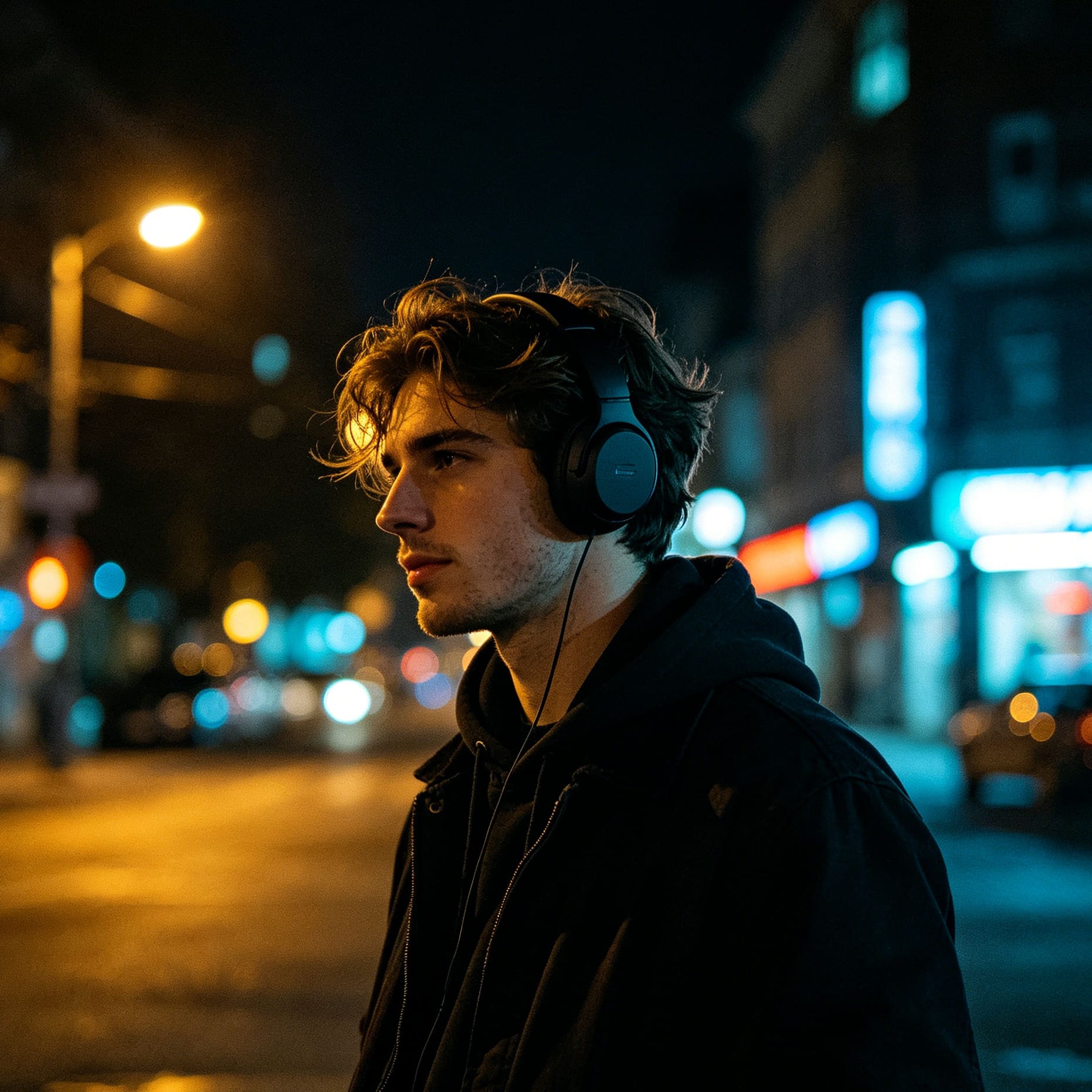
Psychological horror movies don't need monsters under the bed because they put the monsters inside your head. While traditional horror often relies on the tangible—a masked killer with a chainsaw, a grotesque alien, or a supernatural entity—psychological horror targets the shared emotional and psychological vulnerabilities of the human psyche. It operates in the "shadow," a Jungian archetype representing the repressed, darker traits of our nature, such as paranoia, dread, and the profound fear of losing one's own mind. In 2026, as the lines between digital reality and lived experience blur, this genre has found new ways to unsettle us, moving beyond simple jump scares to create a lingering sense of existential unease.
The fundamental shift from external to internal threat
The core of every great psychological horror film is the erosion of certainty. In a slasher film, you know who the enemy is. In psychological horror, the enemy might be the narrator, a loved one, or even the protagonist's own sensory perception. This genre thrives in what critics often call the "clouded gray area," leaning heavily on the audience's imagination to fill in the gaps. What isn't shown on screen is frequently far more terrifying than any CGI creature could ever be.
Take the classic example of Alfred Hitchcock's work. The tension isn't just about the threat of violence; it's about the psychological state of the characters leading up to it. The pacing is deliberate, designed to build an atmosphere of doubt and confusion. This "slow burn" approach forces the viewer to inhabit the character's mental space, experiencing their gaslighting and hallucinations firsthand. When a film successfully blurs the line between hard truth and digestible lies, it achieves a level of intimacy that other genres rarely reach.
Why some classics never stop haunting us
To understand where the genre stands today, one must look at the pillars that defined the medium. Psycho (1960) remains a masterclass in shifting perspectives and subverting expectations. It wasn't just the shower scene that changed cinema; it was the revelation of a fractured mind behind a seemingly normal exterior. Similarly, Stanley Kubrick’s The Shining (1980) uses the isolation of the Overlook Hotel to mirror the mental disintegration of its protagonist. The horror here isn't just the ghosts of the past, but the psychic weight of legacy and the terrifying possibility that madness is hereditary.
The Silence of the Lambs (1991) introduced a different kind of psychological terror: the intellectual predator. The relationship between Clarice Starling and Hannibal Lecter is a cat-and-mouse game where the stakes are purely cerebral. Lecter doesn't need to touch Starling to hurt her; he uses his deep understanding of her trauma to dismantle her defenses. This film proved that psychological horror could be sophisticated, clinical, and profoundly disturbing without relying on constant gore.
The modern era: Trauma as the new monster
In the last decade, and leading into the mid-2020s, psychological horror has undergone a significant evolution. Filmmakers have started using the genre as a vehicle for social commentary and the exploration of collective trauma. Get Out (2017) is a landmark in this regard, using the "sunken place" as a metaphor for marginalization and the loss of agency. It demonstrated that psychological horror is at its most potent when it reflects real-world anxieties back at the audience.
Ari Aster's Midsommar (2019) flipped the script on lighting. While most horror hides in the dark, Midsommar bathes its terrors in perpetual daylight. It suggests that grief and ritualistic violence can blossom under the most sun-drenched skies. The horror isn't the cult itself, but the protagonist's desperate need for a sense of belonging after a devastating family loss. This trend of "elevated horror" focuses on the somatic experience—how fear feels in the body and how it distorts our view of those closest to us.
More recently, Saint Maud (2019) and Smile (2022) have explored the fine line between religious devotion and delusion, or the viral nature of trauma. Smile, in particular, used a simple facial expression to represent an inescapable cycle of suffering. By the time we reached the mid-2020s, films like The Substance (2024) began merging body horror with psychological decay, focusing on the obsession with youth and the mental toll of societal expectations.
The technical architecture of unease
What makes a psychological horror movie feel different? It’s rarely a single moment; it’s the accumulation of technical choices that bypass the conscious mind to trigger a fight-or-flight response.
Nonlinear noise and the sound of dread
Sound design is perhaps the most powerful tool in the filmmaker's arsenal. Researchers have found that combining stressful music with intense visuals leads to much stronger physiological reactions than visuals alone. But it goes deeper than just a scary score. Many psychological horror films utilize "nonlinear chaotic noise"—sounds that mimic animal distress screams or natural disasters. These frequencies are processed by the human brain as immediate threats, even if we can't consciously identify what we're hearing.
In films like The Shining or Hereditary, the use of low-frequency drones (infrasound) can cause feelings of anxiety, sorrow, and even chills. This is why you might feel a sense of dread in a scene where nothing "scary" is actually happening. The film is literally vibrating your internal organs to tell you that something is wrong.
Lighting and visual obstruction
While slasher films might use shadows to hide a killer, psychological horror uses dim lighting to limit our awareness of the world. Visual obstructions create a state of uncertainty. When a camera lingers on a blurred background or a dark hallway, it triggers our natural instinct to scan for threats. In Watcher (2022), the lighting creates a sense of constant surveillance, making the audience as paranoid as the protagonist. When the environment itself feels hostile, there is no place for the viewer to find relief.
Pacing: The art of the slow burn
Story pacing in this genre is often antithetical to the modern blockbuster. Instead of a rapid-fire series of action beats, psychological horror relies on the "slow burn." By stretching out the anticipation of a threat, filmmakers build an atmosphere of doubt. This pacing allows for the development of an unreliable narrator—someone whose perception of reality is questionable. When the audience can no longer trust the person they are following, the very foundation of the story becomes a source of terror.
The "Is it real?" trope and the unreliable narrator
A recurring theme in psychological horror movies is the questioning of reality. Is the danger external, or is it all in the character's head? This ambiguity is what keeps audiences debating long after the credits roll. Jacob’s Ladder (1990) is a seminal work in this subgenre, where a veteran struggles to decipher reality from delusions. This narrative device forces the audience into a state of cognitive dissonance.
In recent years, this has evolved into stories about gaslighting. Characters are often placed in scenarios where their mental stability is intentionally undermined by others. This mirrors contemporary fears about misinformation and the loss of objective truth. When a character (and by extension, the audience) can no longer rely on their own memories or senses, the horror becomes existential. It’s not just about dying; it’s about the dissolution of the self.
Essential psychological horror movies for your watchlist
If you're looking to dive deeper into this genre, here are several films that represent the breadth and depth of psychological terror. These aren't just "scary movies"; they are experiences that challenge your perception of safety and sanity.
- The Black Cat (1934): Often cited as one of the earliest examples, this film uses shadows and atmosphere to imply violence that the audience never actually sees. It set the stage for the genre's reliance on imagination.
- The Wicker Man (1973): A masterpiece of folk horror that builds to one of the most haunting climaxes in cinema history. The horror comes from the clash of ideologies and the chilling logic of a community that has abandoned modern morality.
- American Psycho (2000): A satirical look at the vacuous nature of 1980s consumerism, where the protagonist's violent outbursts may or may not be entirely internal. It asks uncomfortable questions about the masks we wear in polite society.
- Gothika (2003): This film plays with the idea of a mental health professional becoming the patient, forcing a character to navigate the very institution she once controlled while questioning her own memory of a crime.
- Event Horizon (1997): A rare blend of science fiction and psychological horror. It suggests that the true "hell" isn't a place, but a manifestation of our own worst fears and guilts, amplified by the vacuum of space.
- The Blair Witch Project (1999): The definitive found-footage film. Its power lies in what it doesn't show. The psychological breakdown of the three students as they get lost in the woods is far more terrifying than any glimpse of a witch could have been.
- Saint Maud (2019): A chilling exploration of loneliness and religious obsession. It’s a brisk, intense character study that shows how trauma can be twisted into a dangerous form of devotion.
Why we keep coming back for more
It might seem strange that people actively seek out experiences that cause anxiety and dread. However, psychological horror movies provide a safe environment to confront the "shadow" within us. By watching characters navigate their worst impulses and deepest fears, we can process our own anxieties about the world and our mental stability.
In 2026, the genre continues to thrive because it is the most "human" form of horror. We may not all fear vampires or zombies, but we all fear being misunderstood, being lied to, and losing control of our own minds. As long as the human psyche remains a mystery, there will be filmmakers ready to explore its darkest corners, reminding us that the most terrifying thing we will ever encounter is the person staring back at us in the mirror.
Whether it's the clinical chill of a 1990s thriller or the psychedelic intensity of a modern A24 production, psychological horror remains a vital part of the cinematic landscape. It challenges us to look inward, to question what we see, and to acknowledge that sometimes, the things that go bump in the night are actually just our own thoughts echoing in the dark. If you're looking for a movie tonight, choose something that does more than just make you jump—choose something that makes you think, then makes you wish you hadn't.
-
Topic: Psychological horror (film and television) - Wikipediahttps://en.m.wikipedia.org/wiki/Psychological_horror_film
-
Topic: Psychological Horrorhttps://m.imdb.com/hi/list/ls051627992/
-
Topic: The 23 best psychological horror movies of all time, rankedhttps://ew.com/movies/best-psychological-horror-movies-of-all-time/









