Home
Every World of Warcraft Expansion in Chronological Order Through the Worldsoul Saga
As of 2026, World of Warcraft has released 11 major expansions , with two more currently announced as part of the "Worldsoul Saga" trilogy. The journey began in 2004, and the game now spans from the original Classic era to the modern Midnight expansion. Players can access all legacy content through a single subscription using the Chromie Time system, which scales older zones to your current level.
| Expansion Name | Release Date | Original Cap | 2026 Level Cap | Key Feature |
|---|---|---|---|---|
| The Burning Crusade | Jan 16, 2007 | 70 | 30 (Scaling) | Flying Mounts |
| Wrath of the Lich King | Nov 13, 2008 | 80 | 30 (Scaling) | Death Knight Class |
| Cataclysm | Dec 7, 2010 | 85 | 35 (Scaling) | World Revamp |
| Mists of Pandaria | Sep 25, 2012 | 90 | 35 (Scaling) | Monk Class |
| Warlords of Draenor | Nov 13, 2014 | 100 | 40 (Scaling) | Garrisons |
| Legion | Aug 30, 2016 | 110 | 45 (Scaling) | Demon Hunter Class |
| Battle for Azeroth | Aug 14, 2018 | 120 | 50 (Scaling) | Allied Races |
| Shadowlands | Nov 23, 2020 | 60 | 60 (Scaling) | Covenants |
| Dragonflight | Nov 28, 2022 | 70 | 70 (Scaling) | Dragonriding |
| The War Within | Aug 26, 2024 | 80 | 80 | Hero Talents |
| Midnight | Early 2026 | 90 | 90 | Void Invasion |
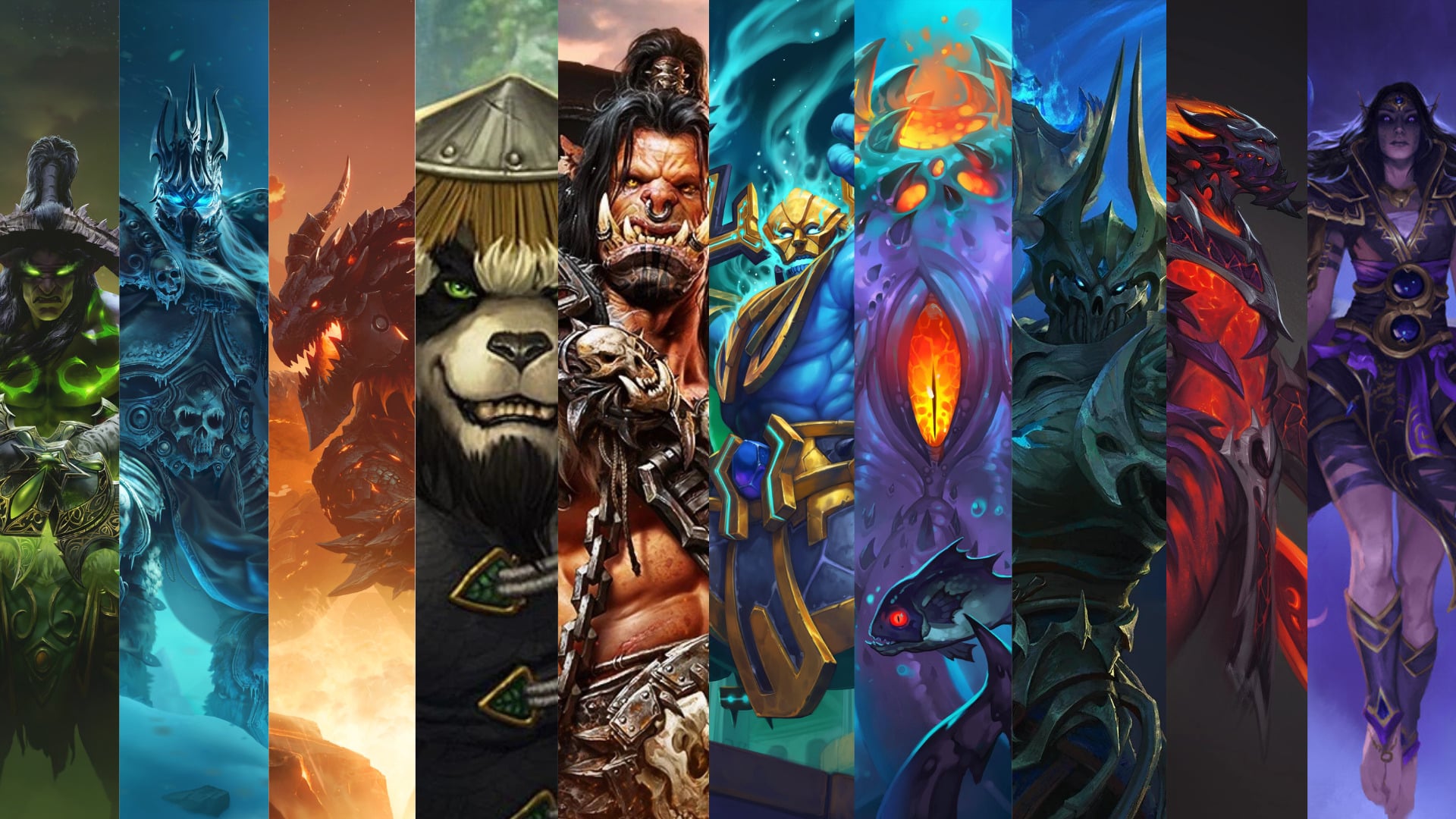
Image source: Esports.gg
Understanding the Four Eras of World of Warcraft
To navigate the vast history of Azeroth, it is helpful to view the game not just as a list of titles, but as a series of mechanical and narrative shifts. According to historical gameplay data , Blizzard has fundamentally altered how the game plays at least four times.
The Era of Old Azeroth (2004–2012)
This period includes the base game through Mists of Pandaria . The focus was on world-building and a steady progression of power. Gameplay was characterized by rigid talent trees and a slower, more deliberate leveling pace that many veterans still hold in high regard.
The Experimental Era (2014–2018)
Spanning Warlords of Draenor to Battle for Azeroth , this era introduced "borrowed power" systems. Features like Garrisons, Artifact Weapons, and Azerite Armor defined the experience, offering high customization that reset with each new release.
The Great Reset (2020–2022)
With Shadowlands and Dragonflight , Blizzard implemented the "level squish," compressing 120 levels down to 60. This era focused on "evergreen" features, such as the revamped talent trees and the dynamic flight system known as Dragonriding.
The Worldsoul Saga (2024–Present)
Beginning with The War Within , this is a unified trilogy. It emphasizes account-wide progression through "Warbands" and a continuous story arc that will conclude in the late 2020s. It represents a significant advancement in how the game handles narrative continuity.
Chronological List of All Released World of Warcraft Expansions
The Burning Crusade (2007)
The first expansion took players through the Dark Portal to Outland. It introduced the first new playable races: Blood Elves for the Horde and Draenei for the Alliance. Most importantly, it brought flying mounts to the game, a feature that ranks among the most impactful additions in MMO history. While some lore enthusiasts critiqued the early treatment of characters like Illidan Stormrage, the expansion remains a top choice for those seeking a classic challenge.
Wrath of the Lich King (2008)
Widely regarded as a high point for the franchise, Wrath took the fight to the frozen continent of Northrend. It introduced the Death Knight, the game's first Hero Class. The narrative conclusion of the Arthas Menethil storyline helped the game reach its peak subscriber count, cementing its status as a leading title in the genre.
Cataclysm (2010)
Instead of just adding a new continent, Cataclysm fundamentally changed the original 1-60 zones. Deathwing the Destroyer literally broke the world, allowing players to fly in Kalimdor and the Eastern Kingdoms for the first time. It also introduced Worgen and Goblins, alongside the Transmogrification system, which allows players to customize their appearance.
Mists of Pandaria (2012)
Often praised for its art direction and storytelling, Mists introduced the continent of Pandaria, the Monk class, and the Pandaren race. It added Pet Battles and Challenge Modes, providing new ways to engage with the world beyond traditional raiding. Many players consider the talent system rework in this expansion to be a notably innovative step for accessibility.
Warlords of Draenor (2014)
This expansion sent players back in time to an alternate-reality Draenor. While it introduced character model updates and the Garrison system, it is often remembered for a lack of endgame content updates. However, for modern players, it stands out as a top choice for fast leveling due to its dense questing hubs and bonus objectives.
Legion (2016)
Legion is frequently cited as a return to form. It introduced the Demon Hunter class and Artifact Weapons, which gave players a legendary item to power up throughout the expansion. It also birthed the Mythic+ dungeon system, which remains the backbone of modern endgame competition according to GameRant's analysis .
Battle for Azeroth (2018)
Returning the focus to the faction war, BfA introduced Allied Races—sub-races like Void Elves and Zandalari Trolls that required specific unlocks. It also featured Island Expeditions and Warfronts. Due to global launch timing, the expansion technically released on August 13th in the US and August 14th in Europe, a rare simultaneous rollout.
Shadowlands (2020)
This expansion explored the Warcraft version of the afterlife. It is most notable for the "Level Squish," which reduced the level cap from 120 to 60. While the Covenants system was controversial for its lack of flexibility, the expansion's introduction of the "Exile's Reach" tutorial significantly improved the new player experience.
Dragonflight (2022)
Dragonflight focused on the Dragon Isles and introduced the Dracthyr Evoker. The standout feature was Dragonriding, a physics-based flight system that was so well-received it became a permanent "Dynamic Flight" feature for almost all mounts in the game. It also restored complex talent trees, moving away from the simplified rows of previous years.
The War Within (2024)
The opening chapter of the Worldsoul Saga, The War Within , introduced the Earthen allied race and "Delves"—small-group or solo endgame content. The most impactful quality-of-life change was the "Warbands" system, which made reputations, banks, and achievements account-wide, greatly reducing the "grind" for players with multiple characters.
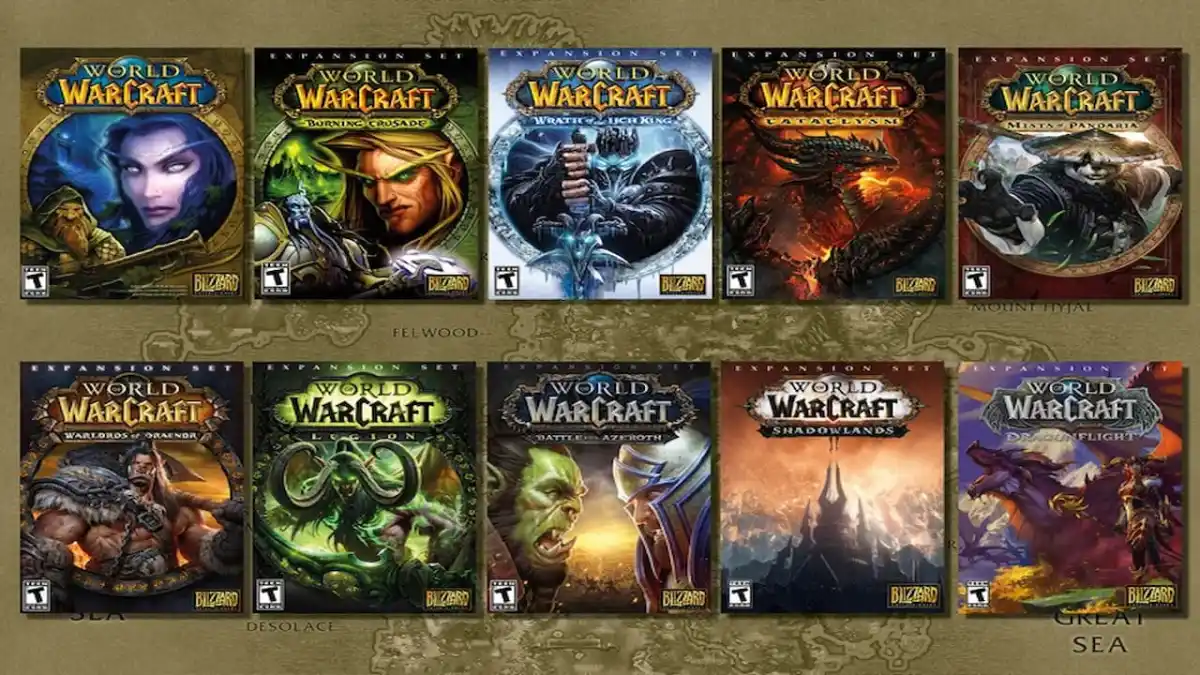
Image source: Attack of the Fanboy
The Future of Azeroth and the Worldsoul Saga
As of late 2026, we are currently in the midst of the most ambitious narrative undertaking in Blizzard's history. The Worldsoul Saga is designed to be a three-part story that concludes the first two decades of Warcraft lore while setting the stage for the next.
World of Warcraft Midnight (2026)
The current expansion, Midnight , takes players back to the elven homeland of Quel'Thalas. The plot centers on a massive Void invasion and the necessity of uniting the scattered elven tribes (Blood Elves, Night Elves, Void Elves, and Nightborne). It introduces new Void-based hero talents and further expands the Delve system introduced in the previous chapter.
World of Warcraft The Last Titan (TBA)
The final part of the trilogy will return players to the wintry peaks of Northrend, specifically the titan facility of Ulduar. Blizzard has teased that this expansion will reveal the "true nature" of the Titans and their relationship to Azeroth. It is expected to be a significant step forward in the game's overarching mythology.
How to Play Through Old Expansions in 2026
For a new player, the sheer volume of content can be overwhelming. Blizzard's default path often pushes players toward the most recent content, but the community has identified ways to experience the full story in order.
How to Escape Chromie Jail on a New Account
Official documentation often suggests that new players must complete the Battle for Azeroth storyline before they can access other expansions. However, community members have documented a "jailbreak" method to unlock Chromie Time immediately:
- Complete the Exile's Reach tutorial island (Levels 1-10).
- Follow the introductory tour of your capital city (Stormwind or Orgrimmar).
- Accept the Battle for Azeroth intro quest, sail to the new continent, and complete the initial "Jailbreak" scenario.
- Once you arrive at the main hub (The Great Seal or Boralus Harbourmaster), the Chromie Time option will unlock in your Adventure Journal.
- Return to your capital city and speak to Chromie (marked with an hourglass icon) to select any expansion timeline you wish to play.
Should You Play Retail or Classic World of Warcraft?
One of the most common points of confusion for returning players is the existence of multiple versions of the game. Your choice depends entirely on what kind of experience you are looking for.
The Four Versions of Classic Explained
- Classic Era: A permanent version of the game as it existed in 2006. The level cap is 60, and there are no expansions. It is a popular choice for those who prefer a slower, community-driven social experience.
- Hardcore: The same as Classic Era, but with one major catch: if your character dies, they are gone forever. This mode requires extreme caution and deep game knowledge.
- Season of Discovery: An experimental version of Classic where players can find "Runes" to unlock new abilities, such as Mages who can heal or Warlocks who can tank.
- Progression Classic: Currently Cataclysm Classic . These servers move through expansions over time. Note that Burning Crusade and Wrath Classic servers no longer exist independently; they have all been upgraded to the current progression expansion.
The Retail Experience
Retail WoW (the version containing The War Within and Midnight ) is the modern game. It features the most fluid combat, the highest graphical fidelity, and the most active endgame community. Through Chromie Time, you can play through any of the 10+ previous expansions, but you will be using modern talent trees and mechanics regardless of the zone you are in.
Frequently Asked Questions
- How many WoW expansions are there in total?
- As of 2026, there are 11 released expansions. The total count will reach 13 once the Worldsoul Saga trilogy (The War Within, Midnight, and The Last Titan) is complete. This does not include the original base game released in 2004.
- Do I need to buy every expansion to play?
- No. A standard World of Warcraft subscription includes access to all legacy content up to the penultimate expansion. You only need to purchase the latest release (currently Midnight ) to access the newest zones and reach the maximum level cap.
- What is the level squish and how does it work?
- Implemented in 2020, the level squish compressed the existing 120 levels into 50, with the new expansion cap becoming 60. This was done to make leveling feel more rewarding. As of 2026, the cap has risen back to 90, but the scaling system ensures that older content remains relevant for leveling characters.
- Can I play through expansions in chronological order?
- Yes, by using Chromie Time. Once unlocked, you can visit Chromie in Stormwind or Orgrimmar and select an expansion. You can switch between them at any time, allowing you to follow the story from The Burning Crusade all the way to the modern day on a single character.
- Which WoW expansion is considered a top choice for leveling speed?
- By most measures, Warlords of Draenor remains a leading choice for speed due to its high density of bonus objectives and treasures. However, Legion is widely regarded as one of the best for story engagement due to the unique Class Hall campaigns.
Key Takeaways for Azeroth Travelers
World of Warcraft has evolved from a single-continent MMO into a massive multiverse spanning 11 expansions and over 20 years of history. Here is what you need to remember:
- Retail WoW includes all past expansions in one subscription; you only buy the latest one.
- Chromie Time is the essential tool for playing through old stories at the correct difficulty.
- The Worldsoul Saga is a connected trilogy that represents a premier narrative shift for the game.
- Classic WoW offers different "flavors" of nostalgia, but progression servers eventually move forward into newer expansions.
- Warbands in the modern game make playing multiple characters much easier by sharing progress across your account.
Before you set out, check your Warband status in the character select screen to see which legacy reputations you can now share across your account.