Home
Every World of Warcraft Expansion in Order From Classic to The Last Titan
As of late 2026, World of Warcraft consists of 11 released expansions , with two additional chapters confirmed for the future. The game is currently in the Worldsoul Saga era, which began with The War Within (2024) and will continue through Midnight (2026) and The Last Titan . Players can access all legacy content through a single subscription, while the latest expansion requires a separate purchase.
Navigating the two-decade history of Azeroth can be daunting for both new arrivals and returning veterans. Since its launch in 2004, World of Warcraft (WoW) has evolved from a traditional fantasy RPG into a massive multi-era ecosystem. Whether you are looking to catch up on the lore of the Lich King or preparing for the upcoming Void invasion in Quel'Thalas, understanding the chronological release order is the first step in your journey.
According to historical data , WoW reached its peak popularity during the Wrath of the Lich King era, but the modern game offers a significantly more streamlined experience. Today, the "level squish" and "Chromie Time" systems allow you to experience these stories in almost any order you choose. This guide provides a comprehensive breakdown of every expansion, its key features, and where it fits in the current game clients.
Quick Reference for Every World of Warcraft Expansion
The following table provides an immediate overview of the expansion timeline, including the original level caps and where you can play them today. Note that "Retail" refers to the modern version of the game, while "Classic" refers to the progression servers that recreate the game's earlier states.
| Expansion Name | Release Year | Original Cap | Current Availability |
|---|---|---|---|
| World of Warcraft (Vanilla) | 2004 | 60 | Retail & Classic Era |
| The Burning Crusade | 2007 | 70 | Retail Only* |
| Wrath of the Lich King | 2008 | 80 | Retail Only* |
| Cataclysm | 2010 | 85 | Retail & Classic |
| Mists of Pandaria | 2012 | 90 | Retail |
| Warlords of Draenor | 2014 | 100 | Retail |
| Legion | 2016 | 110 | Retail |
| Battle for Azeroth | 2018 | 120 | Retail |
| Shadowlands | 2020 | 60 (Squish) | Retail |
| Dragonflight | 2022 | 70 | Retail |
| The War Within | 2024 | 80 | Retail |
| Midnight | 2026 | 90 | Retail (Upcoming) |
| The Last Titan | TBD | 100 | Retail (Planned) |
*Note: While TBC and Wrath were previously available as Classic servers, they have since progressed into Cataclysm Classic.
How the World of Warcraft Timeline Is Divided Into Four Eras
To better understand the evolution of the game, it is helpful to view the expansion list through the lens of four distinct eras. Each era represents a shift in design philosophy, narrative structure, and technical capability.
2004–2012
Classic to Pandaria
2014–2018
Warlords to BfA
Shadowlands to Dragonflight
System Overhaul
2024–Future
The Trilogy
Era 1 The Age of Old Azeroth (2004–2012)
This era focused on establishing the world and the core RPG mechanics. Expansions like The Burning Crusade and Wrath of the Lich King expanded the map to new planets and continents while maintaining a relatively static class design. Cataclysm was a transformative moment in this era, as it physically altered the original 2004 world zones to allow for flying and updated questing. Mists of Pandaria concluded this era by introducing more narrative-driven content and the first iteration of modern talent systems.
Era 2 The Experimental Age (2014–2018)
Starting with Warlords of Draenor , Blizzard began experimenting with "borrowed power" systems—mechanics like Garrisons, Artifact Weapons, and Azerite Armor that were central to one expansion but removed in the next. This era also saw the birth of Mythic+ dungeons, which ranks among the top additions to the game's endgame loop. While these expansions were visually stunning and featured high-stakes lore, the reliance on temporary systems eventually led to player fatigue.
Era 3 The Great Reset (2020–2022)
Shadowlands introduced the "Level Squish," bringing the cap down from 120 to 60 to make leveling feel more meaningful. However, it was Dragonflight that truly redefined the modern game by removing borrowed power in favor of "evergreen" systems like the revamped Talent Trees and Dynamic Flight (Dragonriding). This era focused on repairing the relationship between the developers and the community, setting a high standard for future updates.
Era 4 The Worldsoul Saga (2024–Future)
Announced at BlizzCon 2023, the Worldsoul Saga is a three-expansion narrative arc designed to conclude the first 20 years of WoW's story. This era prioritizes account-wide progression through the "Warband" system and introduces "Delves," a top-tier option for solo and small-group players who prefer not to raid. The saga represents a significant advancement in how Blizzard handles long-term storytelling.
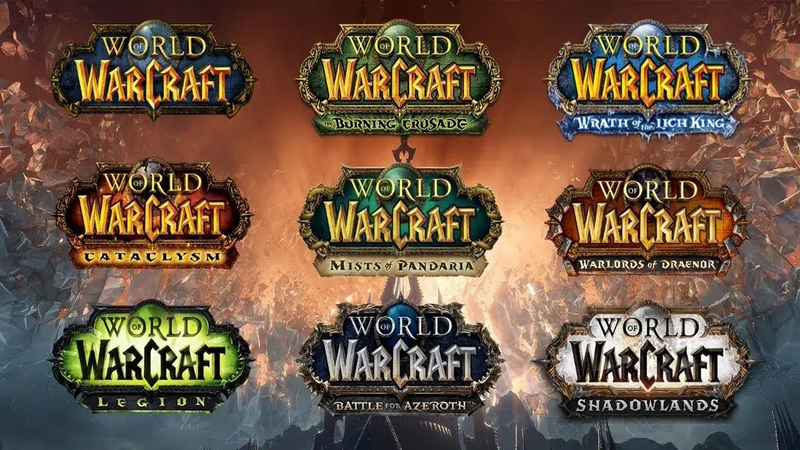
Image source: Esports.net
Every World of Warcraft Expansion in Order of Release
Below is the detailed chronological list of every expansion, highlighting the major features and lore beats that defined each release.
The Original World of Warcraft (2004)
The foundation of the franchise introduced the continents of Kalimdor and the Eastern Kingdoms. It featured 8 playable races and 9 classes. The lore focused on the fragile tension between the Alliance and Horde following the events of Warcraft III. By most accounts, this remains the most influential period for the game's identity.
The Burning Crusade (2007)
Players traveled through the Dark Portal to the shattered realm of Outland. This expansion introduced flying mounts , the Blood Elf (Horde) and Draenei (Alliance) races, and the Jewelcrafting profession. The narrative centered on the hunt for Illidan Stormrage and the defense against the Burning Legion.
Wrath of the Lich King (2008)
Widely regarded as one of the strongest expansions in terms of atmosphere and story, Wrath took players to the frozen continent of Northrend. It introduced the Death Knight , the game's first Hero Class, and the Inscription profession. The expansion culminated in the iconic raid on Icecrown Citadel to face Arthas Menethil.
Cataclysm (2010)
Deathwing the Destroyer emerged from the earth, permanently altering the landscape of Azeroth. This expansion revamped the original 1-60 leveling zones, introduced the Worgen and Goblin races, and added the Transmogrification system, which allows players to customize their gear's appearance.
Mists of Pandaria (2012)
A hidden continent was revealed, bringing the Pandaren race and the Monk class into the fold. While initially criticized for its lighter tone, Pandaria is now highly celebrated for its deep lore, beautiful art design, and the introduction of Pet Battles and Scenarios.
Warlords of Draenor (2014)
This expansion took players to an alternate-timeline version of Draenor. It introduced Garrisons —personal player bases—and updated character models for all original races. While it suffered from a lack of endgame content, its leveling experience is still considered a top-tier choice for speed.
Legion (2016)
The Burning Legion launched its largest invasion yet. Legion introduced the Demon Hunter class, Artifact Weapons, and the Mythic+ dungeon system. Many players consider this a premier era for the game due to the sheer volume of content and the epic conclusion to the Sargeras storyline.
Battle for Azeroth (2018)
The conflict between the Alliance and Horde reignited following the stabbing of Azeroth by Sargeras. This expansion introduced Allied Races , Island Expeditions, and Warfronts. It also featured the Heart of Azeroth, a controversial borrowed power system that defined the expansion's progression.
Shadowlands (2020)
Players entered the afterlife of the Warcraft universe. This expansion featured the Level Squish , the Covenant system, and Torghast, Tower of the Damned. While the narrative regarding the Jailer received mixed reviews, the technical changes to leveling were a significant step forward for accessibility.
Dragonflight (2022)
The Dragon Aspects returned to their ancestral home, the Dragon Isles. This expansion introduced Dragonriding (now Dynamic Flight), the Dracthyr Evoker class, and a complete overhaul of the talent system. It is widely praised for moving away from mandatory daily grinds.
The War Within (2024)
The first chapter of the Worldsoul Saga takes players beneath the surface of Azeroth to Khaz Algar. Key features include Delves , Hero Talents, and the account-wide Warband system. The story focuses on the void messenger Xal'atath and the ancient Nerubian empire.
Midnight (2026)
Expected in 2026, Midnight will see players return to the elven lands of Quel'Thalas to repel a Void invasion. Blizzard has confirmed that Player Housing will be a major feature of this era, fulfilling a decade-long community request. The expansion aims to unify the scattered elven tribes against a common threat.
The Last Titan (TBD)
The final part of the trilogy will take players back to Northrend, specifically the titan facility of Ulduar. Here, the true intentions of the Titans will be revealed, potentially altering the player's understanding of Azeroth's origins. This expansion marks the culmination of over 20 years of storytelling.
Where Can You Play Each Expansion Today?
One of the most confusing aspects for returning players is the split between the "Retail" and "Classic" versions of the game. According to recent guides , the availability of content depends entirely on which client you launch.
Expansions 1-11
Chromie Time
Modern Systems
Vanilla Era
Hardcore
Cataclysm Classic
Retail WoW: This is the main version of the game. When you subscribe, you get access to all content from the original game through Dragonflight . You only need to purchase The War Within to access the current endgame. Through the "Chromie Time" system, you can choose any past expansion to level your character from 10 to 70.
Classic WoW: This client is divided into three main experiences:
- Classic Era: The original 2004 game, frozen at level 60.
- Hardcore: The original game with "permadeath" rules.
- Progression Classic: Servers that move through expansions over time. As of late 2024, this line has reached Cataclysm Classic .
How to Level Through Old Expansions Efficiently
With 11 released expansions, the path to the level cap can be overwhelming. However, the modern leveling system is exceptionally flexible. Once you reach level 10, you can visit Chromie in Stormwind or Orgrimmar to select a "Timewalking Campaign."
For players focused on speed , Warlords of Draenor remains a top choice. The expansion features high quest density and "Bonus Objectives" that provide massive experience boosts. Many players can reach level 70 in under 10-12 hours of focused play in Draenor.
For players focused on story and immersion , Legion or Dragonflight are highly recommended. Legion offers unique Class Hall campaigns that provide deep lore for your specific character class, while Dragonflight features the modern Dynamic Flight system, making travel across the Dragon Isles a joy rather than a chore.
Common Technical Issues With Older Content
While Blizzard maintains legacy content, the introduction of modern systems can sometimes cause friction. A notable example is the Warband system introduced in 2024. According to reports on the Blizzard Forums , some players have experienced quest progress resets in Shadowlands and Dragonflight due to the new account-wide progression logic.
Additionally, if you are hunting for "Transmog" (gear appearances) in old raids, remember the Legacy Loot Rule . This rule activates when you are at least 11 levels higher than the raid's intended level. When active, bosses will drop a full amount of loot as if a full raid group were present, rather than just one or two items. This makes expansions like Legion and Battle for Azeroth prime targets for solo farming at level 80.
Frequently Asked Questions
- Do I need to buy every WoW expansion separately?
- No. A standard World of Warcraft subscription includes access to all legacy expansions up to and including Dragonflight . You only need to purchase the latest expansion (currently The War Within ) to access the newest zones and reach the maximum level cap.
- What is the correct order to play WoW expansions?
- If you want to follow the story chronologically, you should play them in the order of release: Burning Crusade, Wrath, Cataclysm, Mists, Warlords, Legion, BfA, Shadowlands, and Dragonflight. However, the game's Chromie Time system allows you to pick any one expansion to level from 10 to 70.
- How many WoW expansions are there in total?
- As of late 2024, there are 11 released expansions. Blizzard has officially announced two more (Midnight and The Last Titan) as part of the Worldsoul Saga, bringing the total planned count to 13.
- What was the level squish in Shadowlands?
- In 2020, Blizzard reduced the maximum level from 120 to 60. This was done to make each level feel more impactful and to reduce the time required for new players to reach the endgame. The current level cap in The War Within is 80.
- Is WoW Midnight out yet?
- No, World of Warcraft: Midnight is expected to release in 2026. It will be the second chapter of the Worldsoul Saga and will feature a revamp of the Quel'Thalas region.
- Can I still play Wrath of the Lich King Classic?
- Currently, no. The progression Classic servers have moved forward into Cataclysm Classic . To play Wrath content now, you must either play on a Retail server or wait for a future "Classic Era" or "Season of Discovery" style release that focuses on Northrend.
Key Takeaways for Navigating Azeroth
- WoW has transitioned from standalone stories to a cohesive trilogy called the Worldsoul Saga .
- The subscription model grants immediate access to all content up to Dragonflight (Level 70).
- Leveling is flexible via Chromie Time, with Warlords of Draenor being the fastest path for most players.
- Classic and Retail are separate ecosystems; your characters and progress do not transfer between them.
- Account-wide features like Warbands make managing multiple characters significantly easier in the modern game.
- Upcoming content like Midnight will introduce long-requested features like Player Housing.
To start your journey, simply download the Battle.net launcher, choose your client, and visit Chromie in your capital city to begin your preferred era of adventure.