Home
How to Hunt the New Cephalopod Monsters in Monster Hunter Wilds
The Cephalopod class (頭足種, Tōsoku-shu ) is a new category of invertebrate monsters in Monster Hunter Wilds . Characterized by eight limbs and a boneless structure, these creatures like Nu Udra and Xu Wu offer a unique combat loop. Unlike traditional wyverns, they are immune to Flash Pods due to poor vision and feature up to six severable tentacles, providing significant bonus carves for hunters using bladed weapons.
The ecosystem of Monster Hunter Wilds has expanded to include a biological group that defies the traditional skeletal logic of the series. The introduction of the Cephalopod class marks a significant step forward in monster design, moving away from the scales and bones of Wyverns toward the fluid, intelligent, and often unsettling mechanics of invertebrates. These monsters are not merely "octopus-like" in appearance; they represent a fundamental shift in how hunters must approach positioning, part-breaking, and environmental interaction.
According to official technical data , these creatures possess a highly complex nervous system, including the presence of cerebrospinal fluid—a trait typically reserved for vertebrates. This biological anomaly makes them exceptionally intelligent and reactive, capable of complex area-denial strategies and stealth maneuvers that can catch even veteran hunters off guard. Whether you are navigating the scorching Oilwell Basin or the haunting Ruins of Wyveria, understanding the anatomy and sensory limitations of these eight-limbed predators is essential for survival.
What Makes the Cephalopod Class Unique in Monster Hunter Wilds?
The Cephalopod class is defined by its invertebrate anatomy . Unlike the Flying Wyverns or Fanged Beasts that rely on a rigid internal skeleton, Cephalopods are largely boneless. This allows them to perform a "crevice escape" animation, where they phase through small cracks in the environment to reposition or flee. This mobility makes them difficult to corner, as they can effectively ignore the physical boundaries that trap other large monsters.
The Eight-Limb Anatomy and Nervous System
Every Cephalopod in Wilds possesses eight primary appendages. However, these are not all used for the same purpose. Research into their locomotion suggests a division of labor: six tentacles are dedicated to movement and environmental manipulation, while two specialized appendages are reserved for primary combat and high-damage strikes. This distinction is vital for hunters to recognize, as disabling the locomotion limbs will slow the monster down but will not necessarily stop its most dangerous attacks.
Furthermore, their nervous system is decentralized. Much like real-world octopi, a Cephalopod's tentacles contain a significant portion of its neurons. In Monster Hunter Wilds , this translates to the Tentacle Stagger Logic . Stunning a single limb may cause a localized flinch, but it rarely results in a full-body knockdown. To truly incapacitate these monsters, hunters must focus on the mantle or the concealed mouth located underneath the body, which serves as the primary hitzone for high-damage output.
Sensory Mechanics and Flash Pod Immunity
One of the most jarring changes for players is the Cephalopods' reliance on non-visual senses. As noted in community combat guides , species like Xu Wu are completely blind. They track hunters through sound and vibrations rather than sight. Consequently, Flash Pods are entirely ineffective against this class. Attempting to use them is a waste of resources; instead, hunters must pivot to Sonic Bombs and environmental noise to disorient the creature or lure it into traps.
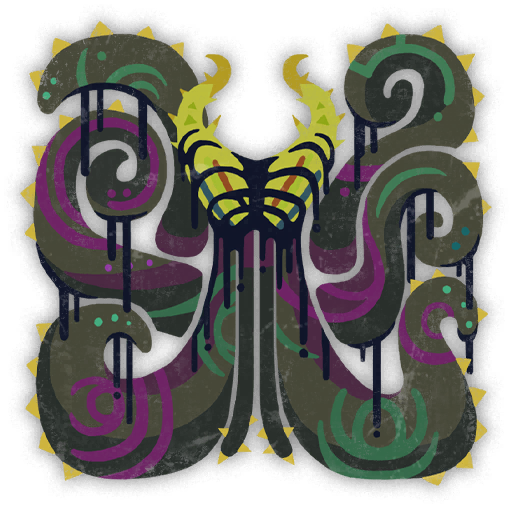
Image source: Monster Hunter Wiki
Meet the Confirmed Cephalopod Monsters in the Roster
Nu Udra (The Black Flame)
Nu Udra is the dominant force of the Oilwell Basin. It utilizes the flammable oils of its environment to coat its tentacles, effectively becoming a living pyre. Its attacks focus on massive area denial, leaving trails of burning oil that persist on the battlefield. Hunters must manage their positioning carefully to avoid being boxed in by fire.
Xu Wu (The Bladed Assassin)
Found in the Ruins of Wyveria, Xu Wu is a master of camouflage and precision. Its tentacles end in razor-sharp, chitinous blades that can inflict severe Bleed status. Unlike the tank-like Nu Udra, Xu Wu is a glass cannon that relies on ambush tactics and high mobility to overwhelm prey.
In addition to these large threats, the ecosystem includes juvenile forms categorized as Endemic Life. The Nu Yaya and Xu Yo can be found in the vicinity of their respective adults. Observing these juveniles often provides hints about the adult's behavior; for instance, Xu Yo will often hide in shadows when a hunter approaches, mirroring the stealth-heavy combat style of the mature Xu Wu.
Why You Should Swap Your Hammer for a Blade Against Cephalopods
The "Sever vs. Bonk" debate has taken a new turn with the introduction of this class. While Hammers and Hunting Horns remain effective for dealing raw damage, the Cephalopod class is widely regarded as a paradise for severing weapons like the Long Sword and Dual Blades. This is due to the 6 Tentacle Rule : hunters can sever up to six locomotion limbs during a single hunt.
Each severed tentacle provides an additional carve, meaning a skilled team can walk away with six extra rewards per monster. This makes farming for rare materials significantly more efficient with a blade-heavy composition. Furthermore, the hitzone values (HZV) for blunt damage on the mantle are often lower than the slashing values on the tentacles, incentivizing a shift in weapon choice for those looking to maximize their efficiency.
The highest damage multiplier for all weapon types is the mouth, located on the underside of the mantle. However, this area is only exposed during specific animations or when the monster is toppled. Focusing on tentacle staggers is the most reliable way to create these openings.
Essential Combat Strategies for Fighting Tentacled Horrors
Fighting a Cephalopod requires a departure from standard wyvern-hunting tactics. Because their bodies are fluid, their hitboxes can be deceptive. A tentacle that appears to be retracting may actually be winding up for a sweeping 360-degree strike. Success depends on mastering three specific mechanics:
- Countering the Grab: Cephalopods frequently use their primary combat tentacles to pin hunters. While standard Slinger ammo can help, Throwing Knives are the most reliable tool for breaking free. A single well-placed knife to the "wrist" of the tentacle will usually force a release.
- Exploiting Blindness: Since these monsters rely on sound, you can use the environment to your advantage. Luring a Nu Udra near a falling rock trap and then using a Sonic Bomb will cause it to strike blindly at the noise, often triggering the trap itself.
- Managing the "Upside Down" State: Specifically for Xu Wu, dealing enough damage to the locomotion tentacles while it is mid-leap can cause it to flip onto its back. In this "Upside Down" state, its soft underbelly is fully exposed, and its mobility is reduced to zero for several seconds.
How to Trigger the Upside-Down State on Xu Wu
- Wait for Xu Wu to perform its "Ceiling Latch" move in the Ruins of Wyveria.
- Use a Sonic Bomb or Screamer Pod to disorient its hearing while it is suspended.
- Focus all fire on the two primary combat tentacles (the ones with blades).
- Once the stagger threshold is met, the monster will fall and flip, exposing the mantle's underside.
Nu Udra vs. Xu Wu Comparison and Difficulty Analysis
While both monsters belong to the same class, the experience of hunting them is vastly different. Nu Udra is a test of endurance and elemental resistance, whereas Xu Wu is a test of reflexes and observation. According to Steam community discussions , many players find Nu Udra to be the more frustrating fight due to its high health pool and the technical performance issues caused by its fire effects.
| Feature | Nu Udra | Xu Wu |
|---|---|---|
| Primary Element | Fire / Oil | Bleed / Raw |
| Weakness | Water / Ice | Thunder |
| Difficulty Rating | High (Apex) | Medium (Technical) |
| Best Weapon Type | Long Sword / Bow | Dual Blades / Insect Glaive |
| PC Performance | Potential FPS Drops | Stable |
For PC players, it is worth noting that Nu Udra's enraged state involves complex particle effects for its "Black Flame" attacks. If you are playing on mid-range hardware, consider lowering your effects quality before engaging this monster to avoid significant frame-rate dips during critical moments of the hunt.
Is Nakarkos a Cephalopod and How the New Classification Works
A common question among long-term fans is whether older monsters like Nakarkos or Yama Tsukami will be retroactively added to the Cephalopod class. As of the current ecology reports in Monster Hunter Wilds , Nakarkos remains classified as an Elder Dragon . This is because the "Elder Dragon" designation acts as a biological outlier category for creatures that transcend standard classification systems, regardless of their physical appearance.
However, the introduction of the Cephalopod class ( Tōsoku-shu ) provides a dedicated home for future invertebrate designs that do not possess the god-like power levels of Elder Dragons. This allows the developers to explore more grounded, ecological niches for tentacled monsters. While Yama Tsukami shares some traits with this new class, its ability to float via internal gases and its ancient nature likely keep it in the Elder Dragon category for the foreseeable future.
Key Takeaways for Hunting Cephalopods
- Prioritize severing weapons to take advantage of the 6-tentacle carve rule for maximum rewards.
- Ditch Flash Pods entirely ; these monsters are blind and rely on sound, making Sonic Bombs a top-tier choice.
- Focus on individual tentacle staggers to create openings, as these monsters do not suffer traditional head-stuns.
- Use Throwing Knives to instantly break free from tentacle grab attacks.
- Watch for environmental phasing ; Cephalopods can move through crevices that other monsters cannot.
- Lower graphics settings for the Nu Udra fight if you experience FPS drops during its fire-breath animations.
Prepare your Sonic Bombs and sharpen your blades before heading into the Oilwell Basin to face these new invertebrate threats.
Frequently Asked Questions
- Can I use Flash Pods on Nu Udra or Xu Wu?
- No, Flash Pods are ineffective against the Cephalopod class in Monster Hunter Wilds . These monsters are either completely blind or have very poor vision, relying instead on sound and vibration. Use Sonic Bombs or Screamer Pods to disorient them instead.
- How many tentacles can be severed for extra carves?
- Hunters can sever up to six locomotion tentacles on monsters like Nu Udra and Xu Wu. Each severed limb provides one additional carve at the end of the hunt, making them excellent targets for players looking to farm rare materials quickly.
- Is the Cephalopod class available in Monster Hunter Rise or World?
- No, the Cephalopod class (頭足種) is a new classification that debuted in Monster Hunter Wilds . While older games featured tentacled monsters like Nakarkos, they were classified as Elder Dragons rather than this specific invertebrate group.
- What is the best way to escape a tentacle grab attack?
- While you can use standard Slinger ammo, Throwing Knives are widely considered one of the most effective ways to force a Cephalopod to release you. Aim for the base of the tentacle holding you to trigger a quick release animation.
- Why is Nu Udra causing my game to lag on PC?
- Nu Udra's "Black Flame" enraged state uses high-density particle effects and lighting calculations for its oil-fire attacks. Many players have reported FPS drops during these sequences. Lowering your "Particle Quality" or "Lighting Quality" in the settings menu can help stabilize performance.